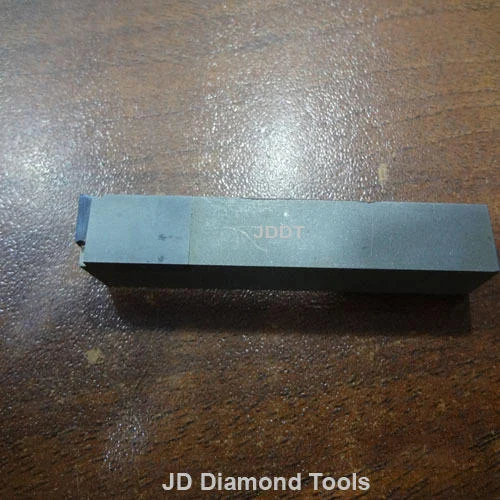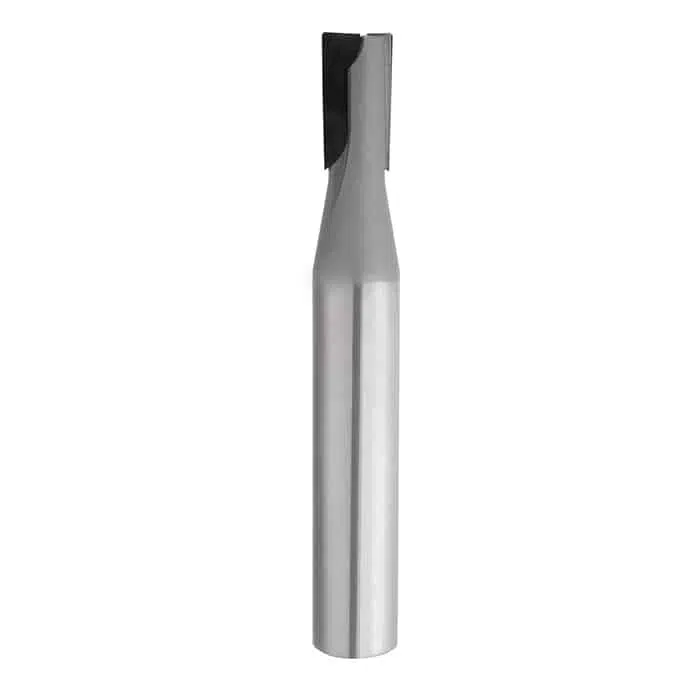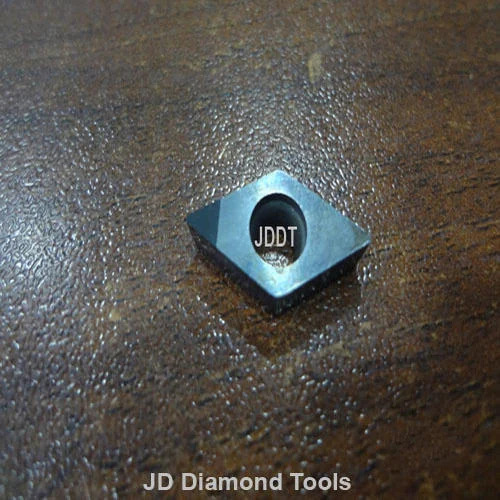
Diamond Inserts
A diamond Inserts is a cutting tool with diamond grains fixed on the functional parts of the tool via a bonding material or another method. As diamond is a superhard material, diamond tools have many advantages as compared with tools made with common abrasives such as corundom and silicon carbide.
Order NowFor Customization
Product Details
Diamond
Inserts – Overview
????
What Are Diamond Inserts?
Diamond inserts are ultra-hard cutting tools used in turning, milling,
grooving, and boring operations. They feature either:
- PCD (Polycrystalline Diamond): for non-ferrous and abrasive materials
- Single-Crystal Diamond: for ultra-fine finishing on non-metallic
materials
They are known for extreme wear
resistance, excellent surface finish, and long tool life,
especially in high-speed machining of non-ferrous and composite
materials.
????
Types of Diamond Inserts:
|
Type |
Best
For |
|
PCD (Polycrystalline Diamond) |
Non-ferrous metals, composites,
plastics, graphite |
|
Single-Crystal Diamond (SCD) |
Ultra-precision finishing, optical
lenses, medical parts |
|
CVD-Diamond Coated Inserts |
General machining of abrasive,
non-metallic materials |
????
Common Shapes:
- CCGT, DCGT, VCGT
(ISO standard turning inserts)
- Tipped inserts
with PCD segments brazed on carbide
- Full-faced inserts
for long-wear applications
- Custom profiles
for grooves, radii, or specific contours
????
Applications of Diamond Inserts
Diamond inserts are ideal for
machining:
- Aluminum (esp. with >10% Si content)
- Copper, brass, bronze
- Graphite electrodes
- CFRP / GFRP composites
- Plastics and thermosets
- Ceramics (non-ferrous types)
⚠️ Not for ferrous metals (e.g.,
steel) – diamond reacts with iron at high heat.
❓
Diamond Inserts – FAQ (Top 10 Questions)
1.
What’s the difference between PCD and single-crystal diamond inserts?
- PCD is
sintered diamond grit – tougher, used for general machining.
- Single-crystal diamond is ultra-sharp and ideal for micro-finishing and
ultra-precision work.
2.
Can I use diamond inserts on steel?
No. Diamond chemically reacts
with iron, causing rapid wear. Use CBN inserts for steels or cast
iron.
3.
How long do diamond inserts last?
Up to 10–100 times longer
than carbide in the right materials, especially in aluminum and graphite
machining.
4.
Are diamond inserts resharpenable?
Yes, PCD and single-crystal
inserts can be reconditioned, but only by specialized grinding or laser
services.
5.
What industries use diamond inserts?
- Aerospace
(composite machining)
- Automotive
(aluminum parts)
- Electronics
(graphite and ceramic machining)
- Medical
(precision plastics)
- Tool & Die
(graphite EDM electrodes)
6.
What cutting conditions work best for diamond inserts?
- High-speed machining
- Stable setups (no vibration)
- Dry or MQL cutting
(avoid coolant with certain plastics or composites)
7.
Are there different grades of diamond inserts?
Yes – manufacturers offer different
PCD grades (coarse or fine grain) for varying toughness and finish needs.
8.
What is the typical surface finish from a diamond insert?
Diamond inserts provide a mirror-like
surface finish, often <0.2 µm Ra, especially in plastics and
aluminum.
9.
Are diamond inserts cost-effective?
Yes. Though more expensive
upfront, they reduce tool changes, improve finish, and eliminate secondary
operations.
10.
Do I need special holders for diamond inserts?
No – most are designed to fit standard
ISO insert holders, especially turning, boring, and milling tools.
Customer Ratings
5.0/5
Based on 2 reviews
Customization product
I’ve been using this product for several months now, and it stands out as one of the best tools for customization in manufacturing. Whether you're working with metal, plastic, or composites, this tool adapts easily to different workflows and materials. Highly recommended for teams looking for precision, efficiency, and customization all in one.