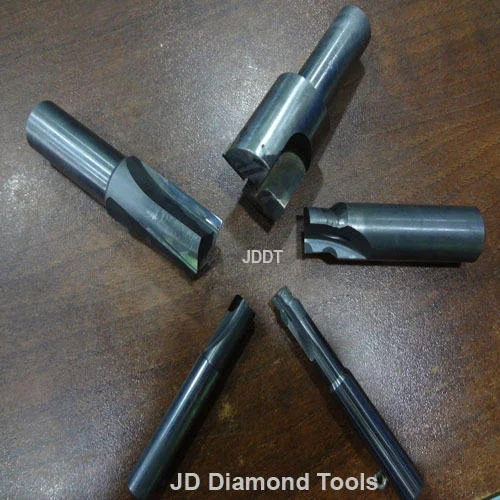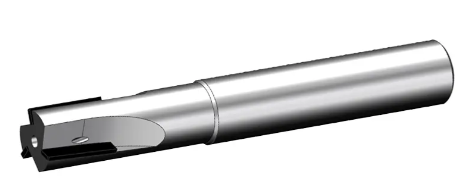
ME30 Series PCD End Milling Cutter
The ME30 PCD universal ball end milling cutter is designed for a wide range of materials including non-ferrous metals (e.g., aluminum and copper alloys), fiber and metal composites, glass, engineering ceramics and plastics, stone, and even wood. This suggests that the ME30 series likely targets similar applications—versatile in nature, designed for efficiency across demanding materials.
Order NowFor Customization
Product Details
Advantages of PCD End Mills
· Exceptional hardness & wear resistance: Due to their polycrystalline diamond cutting edges, these tools last much longer than standard carbide end mills—often enduring up to 100× longer under abrasive conditions.
· High cutting speeds & longer life: PCD enables faster operations with superior tool life and reduced downtime.
· Machining stability: Ideal for challenging materials like carbon-fiber composites and high-silicon alloys, ensuring cleaner finishes and better dimensional accuracy.
Applications & Grading Flexibility
Though not ME30-specific, other PCD tools follow a useful pattern for understanding versatility:
· World IA’s PCD End Mill supports materials ranging from aluminum, copper, and composites to plastics and fiberglass—using multiple PCD grades such as PD01E, PD10E, PD32E, and CVDD to tailor applications..
· For example:
o PD01E (1 µm fine-grain): Ideal for finishing, offering great abrasion resistance—also strong enough for roughing tasks on aluminum alloys.
o PD10E: Balanced toughness and wear resistance; excellent for general non-ferrous finishing and materials like wood or MDF.
o PD32E: Combines wear resistance and thermal stability—great for abrasive high-silicon aluminum or metal matrix composites (MMC).
o CVDD: Pure diamond grade used where mirror finishes and maximum abrasion resistance are required.
Summary Table
|
Topic |
Insight |
|
Application |
Non-ferrous metals, composites, ceramics, plastics, wood |
|
PCD Benefits |
Superior wear resistance, higher speeds, longer tool life |
|
Grades |
Options range from fine finishing to highly abrasive use |
|
Industry Use |
Aerospace, automotive, composites, mold making, energy |
|
Select Tips |
Align grade to material toughness and desired finish |
|
Support |
Likely options for coolant-through, regrind, varied shapes |
Customer Ratings
5.0/5
Based on 2 reviews
Customization product
I’ve been using this product for several months now, and it stands out as one of the best tools for customization in manufacturing. Whether you're working with metal, plastic, or composites, this tool adapts easily to different workflows and materials. Highly recommended for teams looking for precision, efficiency, and customization all in one.
Frequently Asked Questions
1.
What materials does the ME30 series
typically handle?
Likely non-ferrous metals (aluminum, copper/alloys), composites, plastics,
ceramics, and possibly wood—similar to ME31 capabilities.
2. What makes PCD end mills better than carbide
tools?
Their diamond cutting surface offers far superior hardness and wear
resistance—lasting significantly longer and enabling higher cutting speeds.
3. Are
PCD tools suitable for ferrous metals?
No. PCD cannot withstand the high temperatures of ferrous machining and risks
chemical wear.
4. What
edge finishes can ME30 series deliver?
Likely capable of high-quality finishes, especially when using fine-grain PCD
grades (like PD01E or similar), offering clean, delamination-free surfaces.
5. Does
the ME30 series support coolant-through designs?
Many PCD end mills (as seen in industry offerings) support internal
coolant for thermal management and chip removal—ME30 likely offers
similar options.
6. How
to choose the right PCD grade?
Base choice on material and desired outcome: use fine-grain for fineness,
balanced grades for general use, and coarse or pure-grade for high wear
demands.
7. What
shapes are available?
While details for ME30 are scarce, common PCD end mill geometries include square
end, ball nose, and corner radius—likely
offered across series.
8. What
industries use PCD end mills?
Commonly used in aerospace, automotive, wind
energy, mold making, radar/space tech,
and other high-precision fields.
9. Can
these tools be reground or reconditioned?
Many PCD tools are offered with reconditioning services,
allowing multiple rewets and reuse depending on wear conditions and grade.
10. Where
can I get ME30 series details?
Please check manufacturer catalogs or contact the tool supplier
directly—providing exact specifications (e.g. holder type, diameter, grade)
will yield the most accurate guidance.