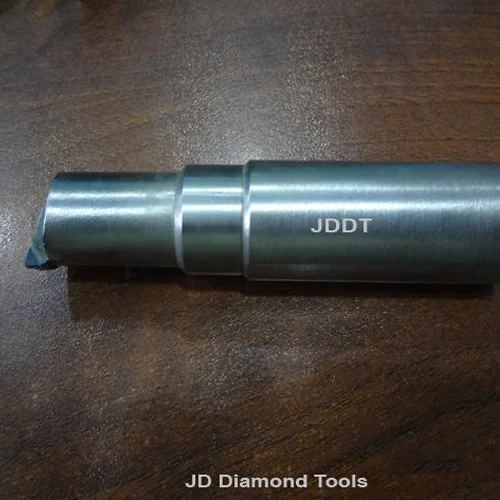
PCD Boring Insert
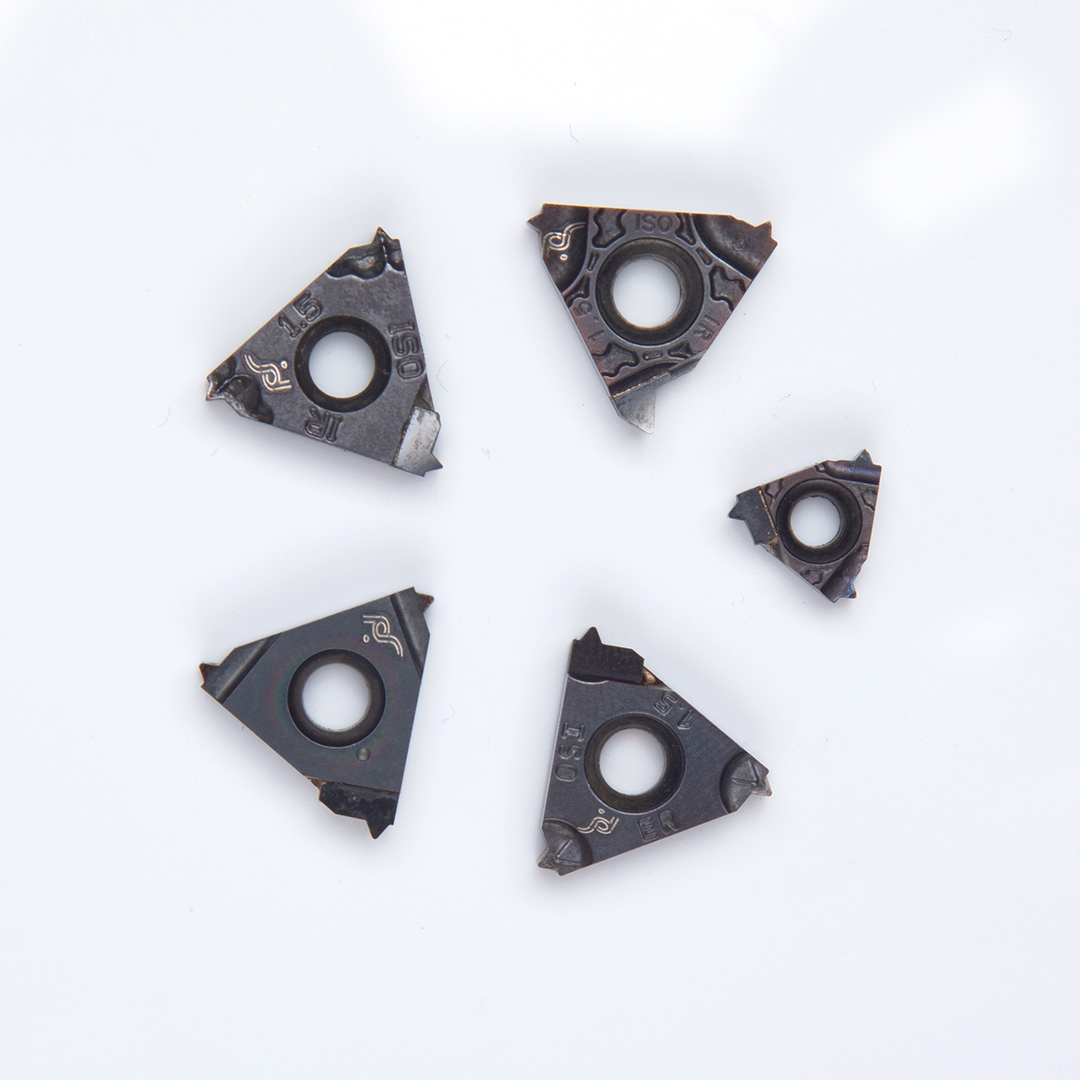
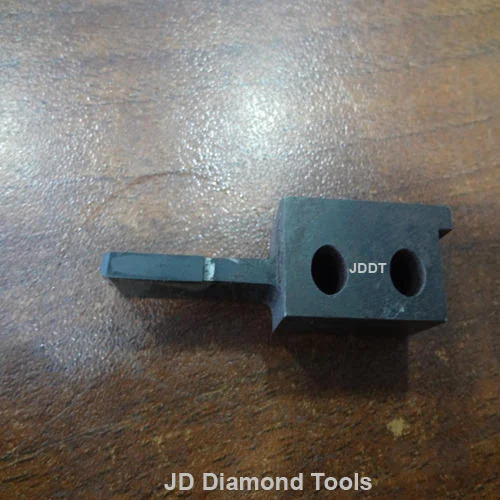
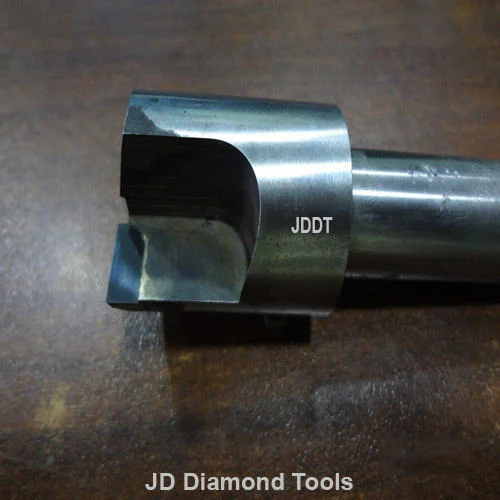
Due to our rich experience and in-depth knowledge of this domain, we have been able to offer a qualitative array of PCD Boring Insert. These boring inserts are largely used to grip metals during application like spot drilling, drilling, welding and taping. We can also offer these boring inserts to the clients at a reasonable price. These boring inserts are also used for cutting and enlarging a hole of circular cross-section in solid ferrous and non-ferrous materials. Features: Accurate dimensions Ability to handle high mechanical stress Rugged design
Order NowFor Customization
Product Details
PCD
Boring Insert – Overview
????
What Is a PCD Boring Insert?
A PCD Boring Insert is a
precision cutting tool used in boring bars or boring heads for internal
machining operations on non-ferrous and abrasive materials. The
insert features a polycrystalline diamond (PCD) cutting edge brazed onto
a carbide or steel body, offering excellent wear resistance, dimensional
accuracy, and surface finish in fine boring applications.
????
Key Features:
|
Property |
Details |
|
Cutting Material |
Polycrystalline Diamond (PCD) |
|
Substrate |
Tungsten Carbide or Steel |
|
Application |
Internal boring, fine finishing,
semi-finishing |
|
Insert Shapes |
ISO standard: CCMT, DCGT,
VCGT, custom boring inserts |
|
Radius Options |
Common: 0.2 mm – 1.5 mm,
depending on application |
|
Typical Boring Range |
Small holes (Ø > 4 mm) to large
bores |
|
Coolant Use |
Often dry or with MQL / air
blast |
????
Applications of PCD Boring Inserts
Ideal for boring:
- Aluminum alloys
(especially with Si content)
- Copper, brass, bronze
- Magnesium alloys
- Plastics, epoxy, and thermoset materials
- Carbon fiber (CFRP) / Glass fiber (GFRP) composites
- Graphite and ceramics
⚠️ Not suitable for ferrous
metals (e.g., steels, cast irons) — use PCBN for those.
❓
PCD Boring Insert – FAQ (Top 10 Questions)
1.
What’s the main advantage of using a PCD boring insert?
Exceptional wear resistance and
precision, especially in non-ferrous
materials, with outstanding surface finish.
2.
Can PCD boring inserts be used on steel?
No. PCD reacts with iron
under heat, causing premature tool failure. Use CBN inserts for steel
and cast iron.
3.
What cutting speeds can PCD boring inserts handle?
They support very high speeds,
typically:
- Aluminum:
800–2,500 m/min
- Composites:
200–600 m/min
- Plastics:
100–400 m/min
4.
Are PCD boring inserts indexable?
Yes. Many are indexable ISO
inserts (like CCMT or DCGT) and fit into standard boring bars.
5.
Can PCD inserts be re-sharpened?
Yes, but only by specialized
grinding services using EDM or laser technology.
6.
Do I need coolant for PCD boring?
Not always. Most PCD boring is done dry or with MQL (Minimum
Quantity Lubrication) to minimize chip buildup and heat.
7.
What industries use PCD boring inserts?
- Automotive
(engine bores, transmission housings)
- Aerospace
(composite and aluminum structures)
- Medical
(plastic components, titanium-free zones)
- Electronics
(precision boring of plastic or aluminum enclosures)
8.
What boring bar types can hold PCD inserts?
PCD inserts can be used with standard
ISO boring bars (with appropriate pocket geometry), or custom
micro-boring tools for small holes.
9.
How does surface finish compare to carbide tools?
PCD delivers a mirror-like finish,
often eliminating the need for polishing or reaming in finishing operations.
10.
Is PCD cost-effective?
Yes, especially in high-volume,
high-precision operations. While more expensive initially, PCD saves
cost over time due to longer tool life and less downtime.
Customer Ratings
5.0/5
Based on 2 reviews
Customization product
I’ve been using this product for several months now, and it stands out as one of the best tools for customization in manufacturing. Whether you're working with metal, plastic, or composites, this tool adapts easily to different workflows and materials. Highly recommended for teams looking for precision, efficiency, and customization all in one.