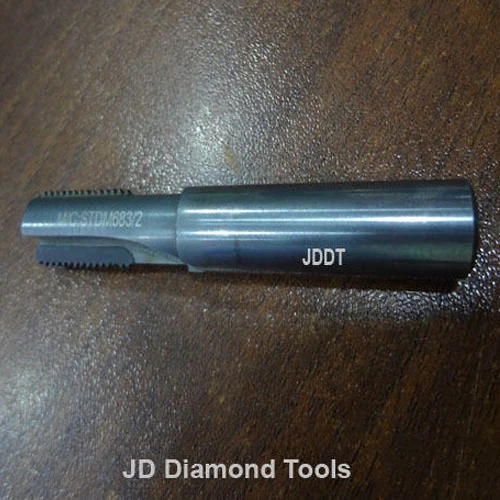
PCD Form Tools
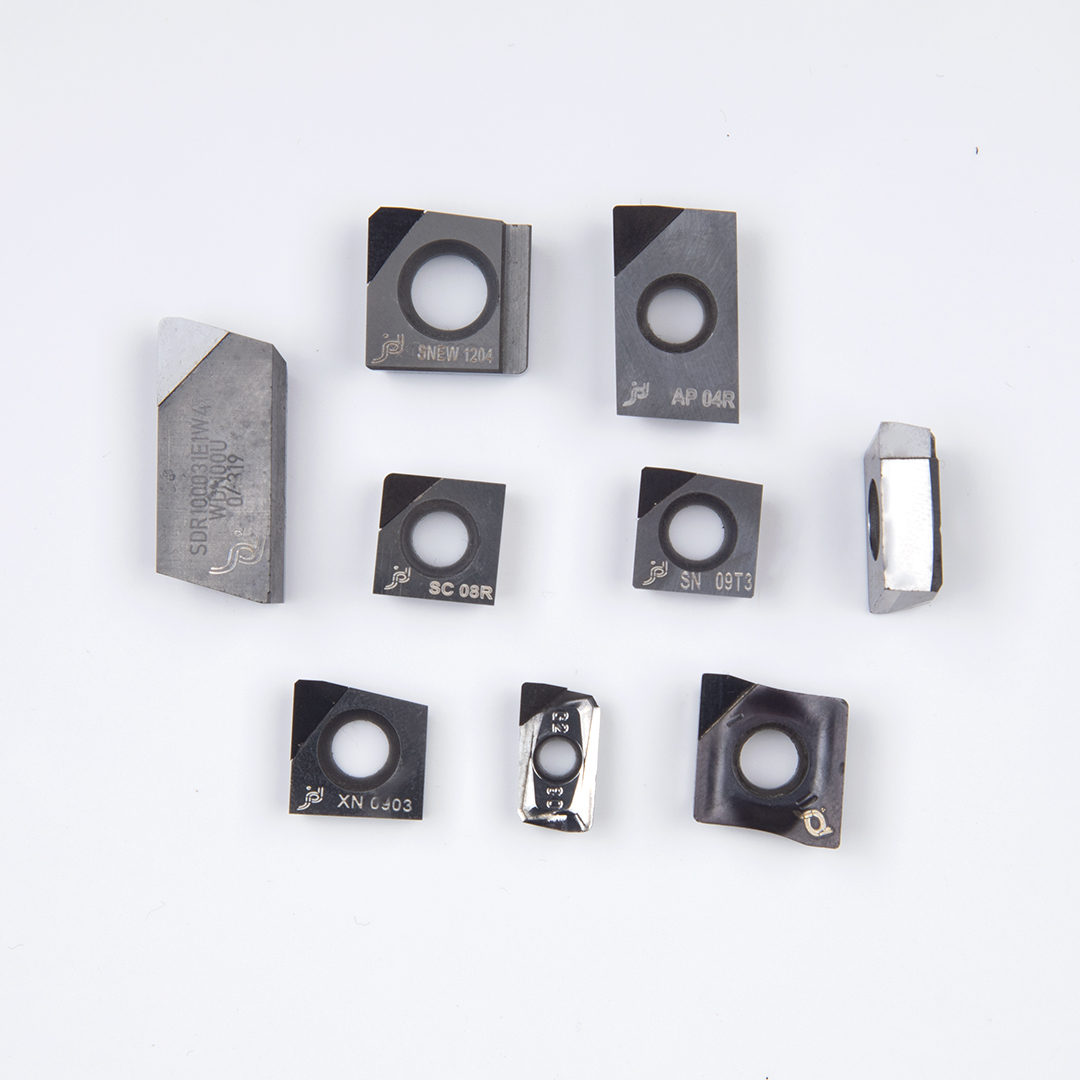
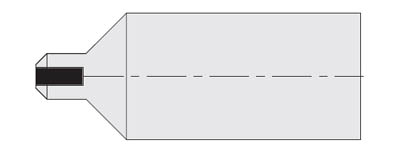
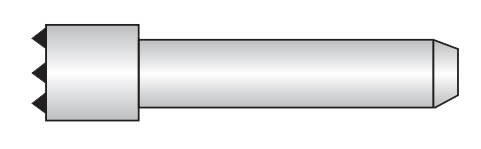
Owing to our robust manufacturing unit, we have been able to offer a quality proven spectrum of PCD Form Tools. These tools are suitable for the machine parts, which have complicated holes requiring ultra-precision. The use of these products ensure one step cutting rather than several times of drilling and reaming with diverse tooling. In addition to this, these tools are known for the following features: High efficiency Low cost Higher speed & feed rates The PCD tipped shaped tools decrease downtime
Order NowFor Customization
Product Details
PCD
Form Tools – Overview
????
What Are PCD Form Tools?
PCD Form Tools are precision cutting tools with custom-designed
profiles, used for profiling, contouring, and complex form machining
of non-ferrous and abrasive materials. They feature Polycrystalline
Diamond (PCD) cutting edges brazed onto a carbide or steel body,
offering exceptional tool life, accuracy, and surface finish.
These tools are custom-engineered to
replicate a specific part geometry in a single-pass machining
operation, reducing cycle time and improving consistency.
????
Key Features:
|
Feature |
Description |
|
Cutting Material |
PCD (Polycrystalline Diamond) |
|
Tool Body |
Steel or tungsten carbide |
|
Edge Type |
Sharp, honed, or multi-radius
profiles |
|
Profile Types |
Chamfers, grooves, radii, steps,
slots, complex curves |
|
Coolant Use |
Dry, air blast, or MQL |
|
Form Accuracy |
Typically ±0.005 mm or better |
|
Customization |
Fully custom based on part drawing
or CAD |
????
Applications of PCD Form Tools
Ideal for high-precision profiling
in:
- Aluminum and aluminum alloys
- Brass, bronze, copper
- Magnesium alloys
- Graphite electrodes
- Carbon Fiber (CFRP), Glass Fiber (GFRP)
- Plastics, thermosets, epoxy resins
- Non-ferrous ceramics
⚠️ Not for ferrous materials
like steel or cast iron. Use PCBN form tools instead.
❓
PCD Form Tools – FAQ (Top 10 Questions)
1.
What are PCD form tools used for?
They're used to machine complex
shapes or contours in one pass — ideal for high-precision, high-volume
production in aerospace, automotive, or electronics industries.
2.
How are PCD form tools manufactured?
They are custom-designed
based on your component drawing, with PCD segments brazed or sintered to
match the profile exactly.
3.
Can I use PCD form tools on steel?
No. PCD chemically reacts with
iron, leading to rapid tool degradation. For steel, use CBN tools.
4.
How long do PCD form tools last?
They offer 10 xs to 100x longer
life than carbide tools, especially in abrasive or high-volume
applications.
5.
Can PCD form tools be re-sharpened?
Yes, but only by specialized
services using EDM or laser grinding. Form accuracy must be
carefully maintained.
6.
What kind of machines are required to use PCD form tools?
You can use them on CNC lathes,
milling machines, or grinders — the machine must be rigid,
vibration-free, and precisely aligned.
7.
Do I need coolant with PCD form tools?
Often not. Most applications use dry cutting or MQL. Air
blast may be used to clear chips.
8.
How precise are PCD form tools?
Form tools can maintain ±5
microns (0.005 mm) or better — critical for aerospace and medical-grade
parts.
9.
What are the benefits over using standard tools?
- Faster cycle time
(complex forms in one pass)
- Better repeatability
- Fewer tool changes
- Improved surface finish
10.
What industries use PCD form tools?
- Aerospace
(composite and aluminum profiles)
- Automotive
(precision grooves, piston shapes)
- Medical
(implants, plastic housing)
- Electronics
(heatsinks, connector profiles)
- Mold & Die
(graphite and plastic molding forms)
Customer Ratings
5.0/5
Based on 2 reviews
Customization product
I’ve been using this product for several months now, and it stands out as one of the best tools for customization in manufacturing. Whether you're working with metal, plastic, or composites, this tool adapts easily to different workflows and materials. Highly recommended for teams looking for precision, efficiency, and customization all in one.