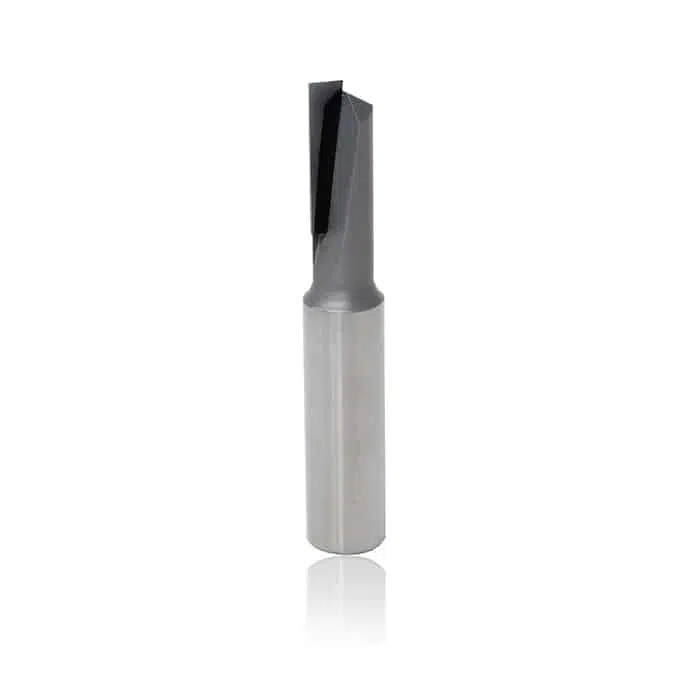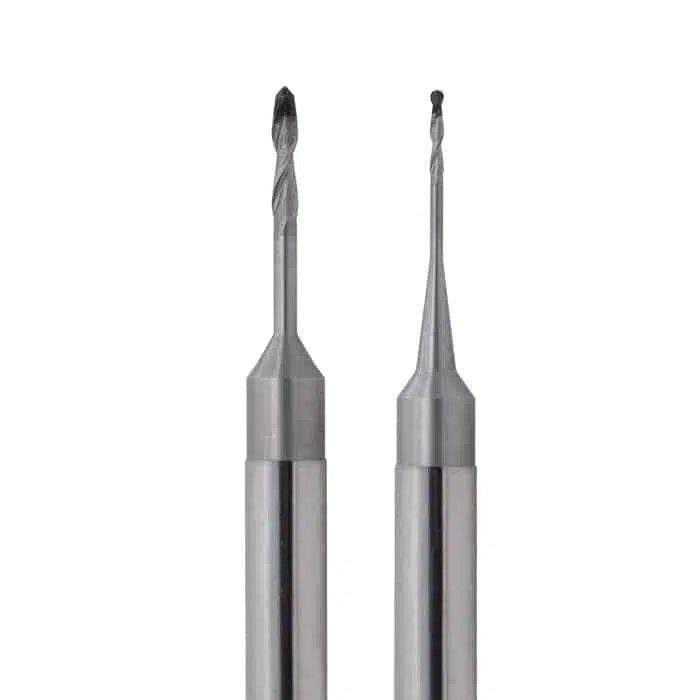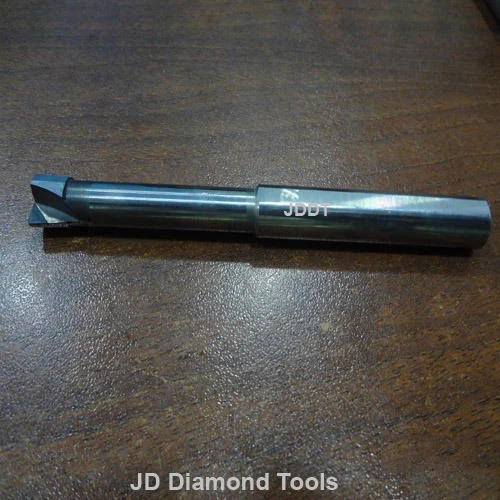
PCD Helical End Mill
We present to our clients supply a wide variety of ISO standard & Special PCD Spot Face tool. These PCD Spot face tool are used for Milling cast iron, aluminum, copper, hardened steel, bronze, and several heat treated metals for metalworking and automobile industries.
Order NowFor Customization
Product Details
PCD
Helical End Mill – Overview
????
What is a PCD Helical End Mill?
A PCD Helical End Mill is a rotary
cutting tool with helical (spiral) flutes and polycrystalline
diamond (PCD) cutting edges. Unlike straight-edge PCD tools, the helical
flute design improves chip evacuation and allows smoother cutting action,
especially in composites and non-ferrous metals.
????
Key Features:
|
Feature |
Description |
|
Flute Shape |
Helical / Spiral flutes |
|
Cutting Material |
PCD-tipped or full PCD |
|
Shank Material |
Solid carbide or steel |
|
Flute Count |
Typically, 2 or 3 for better chip
evacuation |
|
Edge Geometry |
Sharp cutting edges with rake and
clearance angles |
|
Coating |
Usually uncoated (PCD is
self-lubricating) |
????
Ideal For:
- Carbon Fiber Reinforced Plastics (CFRP)
- Glass Fiber Reinforced Plastics (GFRP)
- Aluminum (esp. high Si content)
- Copper and Brass
- Plastics and Resins
- Graphite and Ceramics
✅
Advantages of PCD Helical End Mills
- Superior surface finish and dimensional
accuracy
- Reduced burr formation on exit edges (especially
in composites)
- Longer tool life vs. carbide or straight-flute tools
- Smoother, vibration-free cutting
- Efficient chip evacuation in slotting and
contouring
❓
PCD Helical End Mill – FAQ (Top 10 Questions)
1.
What’s the difference between straight and helical PCD end mills?
Helical PCD end mills have spiral
flutes that reduce cutting forces, minimize delamination, and
improve surface quality, especially on laminated composites like CFRP.
2.
Can I use PCD helical end mills on steel?
No. PCD is not suitable for
ferrous materials—it rapidly degrades when exposed to iron at high
temperatures.
3.
Are they better for composites than carbide tools?
Yes. PCD tools outlast carbide
tools significantly in composites, resist fiber pull-out, and offer cleaner
cuts with less fraying or splintering.
4.
Can I use them for slotting and contour milling?
Absolutely. The helical design makes
them ideal for both slotting and profiling, especially in aerospace
and electronics applications.
5.
What cutting speeds should I use with a PCD helical end mill?
- CFRP/GFRP:
200–600 m/min
- Aluminum:
800–2,000 m/min
- Plastics:
100–300 m/min
(Always consider your material and machine stability.)
6.
What are the typical sizes available?
PCD helical end mills are available
in diameters from 2 mm to 20 mm or more, with 1x to 4x flute
length-to-diameter ratios.
7.
Can these tools be resharpened?
Yes, but only by specialized
grinding services using EDM or laser equipment. It’s typically
cost-effective if the tool body is still in good condition.
8.
Do I need coolant when using them?
Usually, dry cutting or air
blast is preferred. For some plastics or aluminum, MQL (Minimum Quantity
Lubrication) may be used.
9.
What machines are best for using PCD helical end mills?
High-speed CNC milling machines with excellent spindle rigidity and vibration
control are ideal. PCD tools thrive in stable, high-precision
environments.
10.
Are there different grades or coatings of PCD for these mills?
Yes. PCD tools may vary in grain
size (fine vs coarse) and binder content, affecting wear resistance
vs. toughness. They are usually uncoated, but some may use nano-composite
binders for strength.
Customer Ratings
5.0/5
Based on 2 reviews
Customization product
I’ve been using this product for several months now, and it stands out as one of the best tools for customization in manufacturing. Whether you're working with metal, plastic, or composites, this tool adapts easily to different workflows and materials. Highly recommended for teams looking for precision, efficiency, and customization all in one.