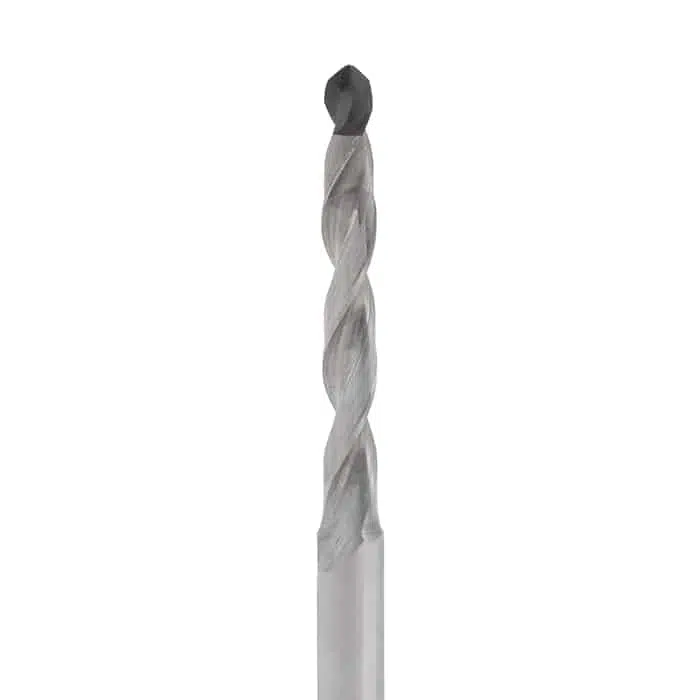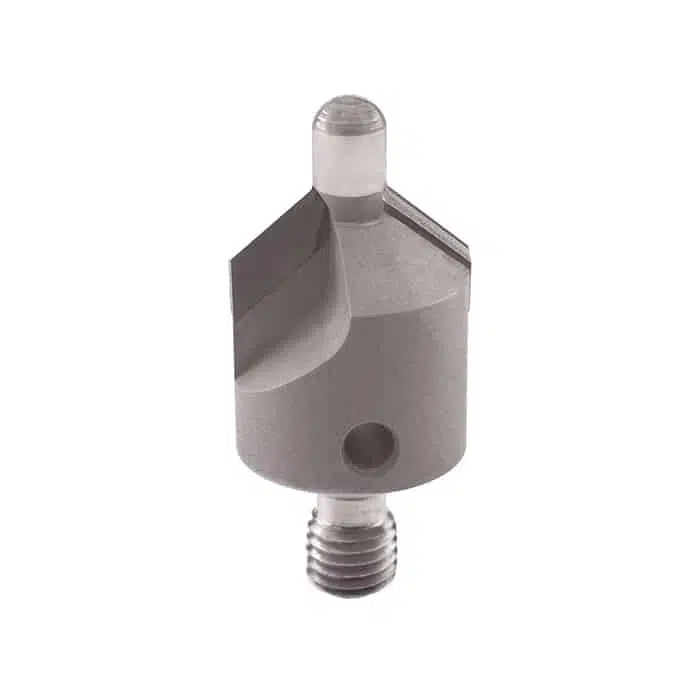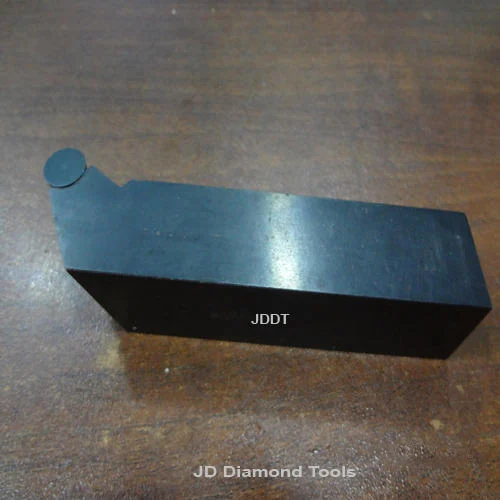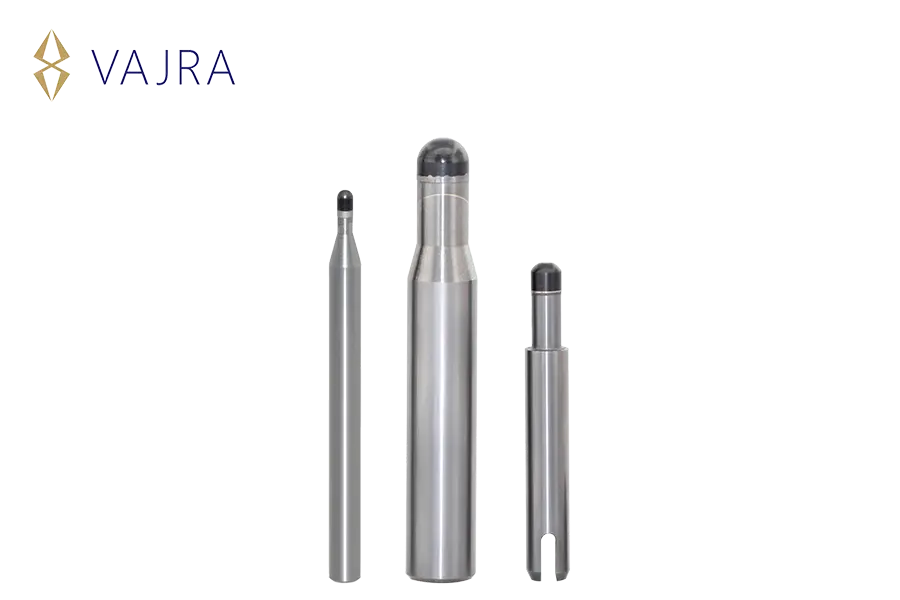
PCD polishing tools
A PCD polishing tool is a machining/polishing instrument whose active surface is made of or tipped with PCD (polycrystalline diamond) material, designed to deliver very high-quality surface finishes (including mirror or near-mirror finishes) on workpieces. For example, one supplier describes a PCD polishing tool “dedicated to mirror polishing, and roughness is below Ra 0.03.” These tools are used in ultra-precision finishing operations, often on non-ferrous metals, composites, plastics, optical surfaces, moulds, etc. Because PCD is extremely hard, wear-resistant and can maintain geometry, these polishing tools can reduce manual labor, improve consistency, and extend service life compared to conventional polishing/finishing tools.
Order NowFor Customization
Product Details
Key
Features
Here are the standout features of
PCD polishing tools:
- Ultra-fine surface finish capability — for example surface roughness down to Ra 0.03 µm in
some applications.
- High precision geometry — the tool diameter tolerance may be as tight as 0-3
µm, and the radius tolerance (for ball nose types) may be ±2 µm.
- Excellent wear resistance and long tool life — since PCD is very hard and abrasion-resistant, the
tool holds its finish/edge longer than many conventional polishing or
finishing tools.
- Suitability for mirror/gloss finishes — tools can reduce or eliminate subsequent manual
polishing stages, improving productivity.
- Re-conditionable (in many cases) — some suppliers offer re-grinding or refurbishing of
PCD polishing tools, reducing total cost of ownership.
- Low friction / good thermal conductivity — PCD has favourable physical properties (low
coefficient of friction in many cases vs conventional substrates, good
heat dissipation) which help with high-precision polishing.
- Stable substrate and sharp edge condition — Because the tool maintains geometry and edge
sharpness longer, the consistency of the finish remains higher.
- Customizable tool radii, diameters — For example, ball-nose radii such as
0.05/0.075/0.1/0.2/0.3/0.5/0.75/1 mm are cited by one supplier.
- Suitable for non-ferrous & composite materials — While polishing tools, the same PCD material
properties make them well-suited for finishing non-ferrous alloys,
composites, plastics, optical materials.
- Reduced manual polishing, improved process automation — Because surface finish can achieve very high
standards with the PCD tool, downstream polishing stages may be eliminated
or simplified.
Customer Ratings
5.0/5
Based on 2 reviews
Customization product
I’ve been using this product for several months now, and it stands out as one of the best tools for customization in manufacturing. Whether you're working with metal, plastic, or composites, this tool adapts easily to different workflows and materials. Highly recommended for teams looking for precision, efficiency, and customization all in one.
Frequently Asked Questions
Q1: What exactly does “PCD polishing
tool” mean?
A1: It means the tool uses a cutting or polishing surface made of or
tipped with polycrystalline diamond (PCD) material, engineered to perform
finishing/polishing rather than heavy stock removal. The diamond gives very
high hardness and wear resistance, allowing the tool to maintain its geometry
and edge for longer, thereby producing a high-quality final surface.
Q2: Why use a PCD polishing tool
instead of a conventional polishing or carbide finishing tool?
A2: PCD tools provide superior wear resistance, longer life, better
finish consistency, and often allow elimination of manual polishing steps. For
example, one application achieved roughness below Ra 0.03 µm with PCD
finishing. Conventional tools may wear out, degrade finish quality or require
multiple polishing operations, increasing cost/time.
Q3: What materials are suitable for
PCD polishing tools? Are there any limitations?
A3: Suitable materials include non-ferrous metals (aluminium alloys,
copper, brass), plastics and composites, optical materials, mould/die steels
(depending on tool substrate/coating). However, caution: in ferrous metals,
diamond may chemically react or wear faster — so tool life may be significantly
reduced. PCD tools are optimized for non-ferrous/abrasive applications.
Q4: What kinds of tool geometry/specifications
are typical?
A4: For example, ball-nose radii might be
0.05/0.075/0.1/0.2/0.3/0.5/0.75/1 mm. Diameter tolerance may be 0-3 µm. Radius
tolerances ±2 µm. Surface finish capability down to Ra 0.03 µm.
Depending on manufacturer, there can be various shapes (cylindrical, ball-nose,
free-form, etc).
Q5: How does one optimise process
parameters for PCD polishing tools?
A5: Key factors include: tool speed (rpm), feed rate or traverse, depth
of cut (if any), coolant or lubrication (often minimal to avoid thermal shock
or distortion), workpiece fixturing/rigidity, tool run-out minimization,
ensuring the machine is vibration-free. For precision finishing, oscillation or
slow feed with many passes may be used versus fast roughing. Also: ensure the
tool’s geometry is correct, chips/particles are flushed away, and vibrations
damped. Many suppliers will provide data or guidelines for their tool.
Q6: What is tool life expected like
for PCD polishing tools compared to conventional tools?
A6: While exact life depends heavily on application (material, machine,
finishing requirement, process conditions), PCD tools typically offer
significantly longer life than carbide or coated tools in abrasive/finishing
applications. Some sources say PCD tools can out-produce conventional tools by
factors of 10 or more.
In finishing applications, the benefit is not just tool life but also stable
finish quality over longer runs.
Q7: Are PCD polishing tools
cost-effective?
A7: Yes — while initial cost may be higher than conventional finishing
tools, the benefits (longer tool life, reduced polishing steps, lower
scrap/rework, higher consistency) often justify the investment. Also, some
tools are re-conditionable, further reducing cost per part. For high-volume/high-precision
finishing, the ROI can be quite compelling.
Q8: What maintenance or inspection
is required for PCD polishing tools?
A8: Regularly inspect the tool edge/face for wear, chipping, rounding of
the diamond surface. Monitor finish quality of the workpiece: if surface
roughness begins to degrade, tool wear may have advanced. Verify tool run-out
and machine rigidity remain acceptable. If designed to be re-conditioned,
follow manufacturer’s re-sharpen or re-grind schedule. Also check coolant or
lubrication is correct and that there is no thermal damage or bonding build-up
on the tool.
Q9: What are the main risks or
things to watch out for when using PCD polishing tools?
A9: – Workpiece or machine vibration can reduce finish quality or damage
tool.
– Inappropriate speed/feed or too aggressive cut can cause tool chipping or
degrade the diamond surface.
– Using on unsuitable materials (e.g., certain steels) may result in rapid wear
or tool failure.
– Inadequate coolant/lubrication or improper chip/particulate evacuation
leading to build-up.
– Poor fixture or machine alignment may compromise the finish.
– Ensure that the tool’s geometry is correctly selected for the finish required
(radius, diameter, tool path).
Q10: What should I ask my tool
vendor/manufacturer when selecting a PCD polishing tool?
A10:
- What surface roughness (Ra) can the tool reliably
achieve for my material?
- What are the recommended tool geometry (radius,
diameter, shape) for my part?
- What tolerances (diameter, radius) does the tool hold?
- What process parameters (speed, feed, depth,
lubrication) do you recommend for my material and machine?
- What materials is the tool optimised for (including
limitations)?
- What is the expected tool life, and what criteria
define end-of-life?
- Can the tool be re-conditioned/refurbished, and what is
the cost?
- What machine/fixture rigidity or run-out levels do you
require to achieve the finish?
- Are there sample parts or references for my
industry/material?
- What warranty or support is provided?