MCD tooling series-Dressers
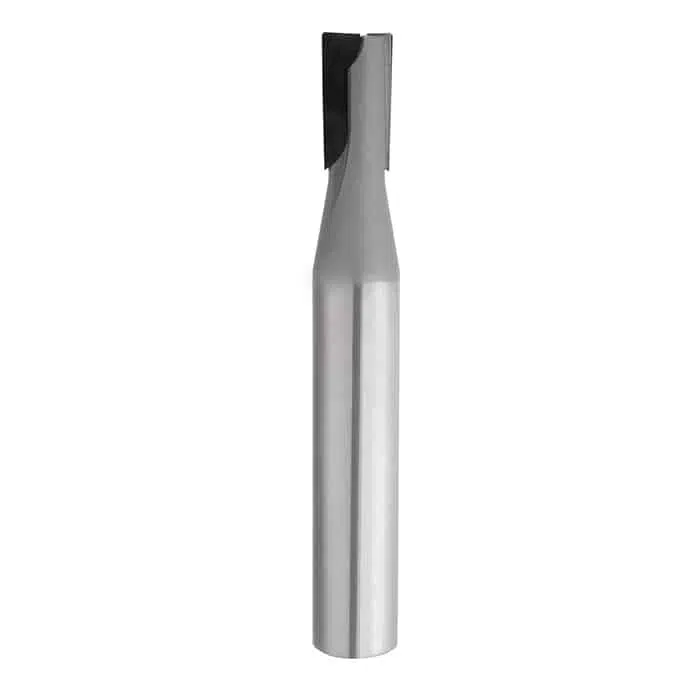
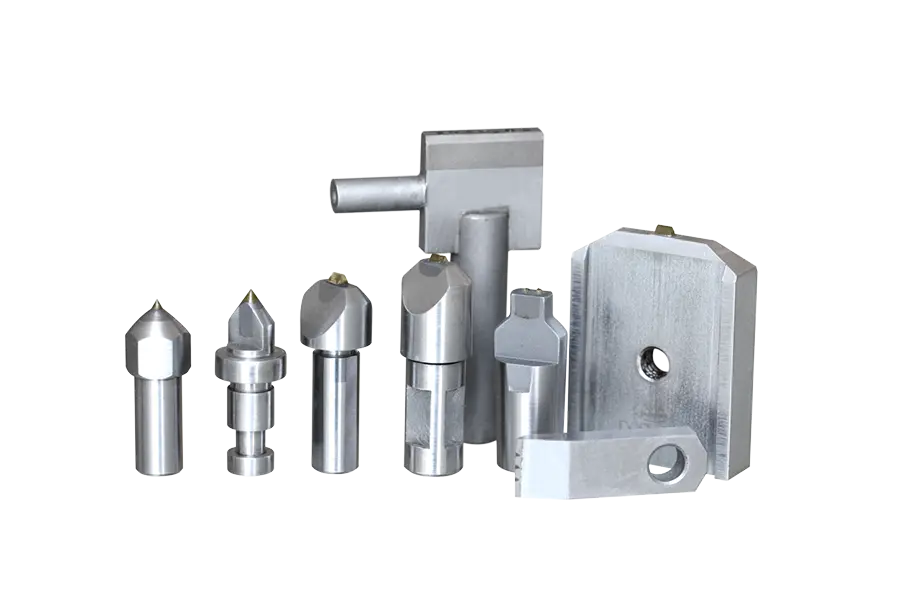
“MCD” stands for Mono-Crystalline Diamond. Dressers in the MCD tooling series are grinding-wheel dresser tools wherein the cutting/dressing element is made of a single-crystal diamond. This diamond is mounted/bonded into a shank or holder, and is used to true, dress, profile or restore grinding wheels (vitrified, resin-bonded, CBN/diamond wheels etc). For example: a manufacturer notes that “single point dressers with MCD needles … the advantage of the synthetic diamond over the natural one is that its precise geometry remains constant over the whole of its working life.” These dressers are especially suited for high-precision grinding operations where maintaining exact wheel geometry, excellent surface quality and minimal tool wear are critical. So the “MCD Tooling Series – Dressers” refers to a class of diamond-dressers built with mono-crystalline diamond (or equivalent high-grade synthetic diamond) for demanding applications.
Order NowFor Customization
Product Details
Key Features
Here are the primary features you can expect in an MCD tooling-dresser line:
1. Mono-crystalline diamond tip – The use of MCD provides extremely high hardness, excellent wear resistance and a constant geometry over life. (e.g., described in catalogs as MCD needles for single-point dressers).
2.
Precision geometry / sharp cutting edge
– Because the diamond is high quality and well mounted, the dresser delivers
precise profile or form control when dressing wheels (especially for profiled
wheels).
3.
4. High tool life / stability – The MCD material resists wear, maintains its shape, which means fewer tool changes and more consistent dressing results over time.
5. Suitability for complex profiles – Many MCD dressers are available pre-ground with radii/angles or in profile-forms to dress wheels with complex geometries. For example: “Profile dressers with MCD diamonds … shape-ground”
6. Good thermal/structural performance – Because MCD has very good thermal conductivity and stability, it can handle demanding dressing operations better than conventional diamonds in some cases. (E.g., MCD blades noted for superior thermal conductivity)
7. Customization options – Shank dimensions, holder types, diamond size/grade, profile shape, mount type are often customizable. (Holders “other shank dimensions available on request”.)
8. Reduced downtime / improved productivity – With longer life and stable performance you can maintain wheel performance better, reducing wheel change or re-profiling frequency.
9. Compatibility for precision grinding machines – These dressers are designed for cylindrical grinders, internal grinders, surface grinders with profile and form dressing needs.
10. Better surface finish / part quality downstream – By maintaining accurate wheel geometry and sharp wheel surface, the finished work-pieces will have better finish, tighter tolerances and fewer rejects.
11. Investment-grade tooling – Because MCD dressers cost more than conventional dressers, they represent a premium tooling solution for high-end manufacturing.
Customer Ratings
5.0/5
Based on 2 reviews
Customization product
I’ve been using this product for several months now, and it stands out as one of the best tools for customization in manufacturing. Whether you're working with metal, plastic, or composites, this tool adapts easily to different workflows and materials. Highly recommended for teams looking for precision, efficiency, and customization all in one.
Frequently Asked Questions
Q1: What exactly is an “MCD dresser” in this context?
A1: An MCD dresser is a grinding-wheel dresser tool where the
cutting/dressing element is made out of Mono-Crystalline Diamond (MCD). It is
mounted/held in a shank and used to true, dress or profile grinding wheels. Its
geometry and wear-resistance are higher than standard diamonds. For example,
single-point dressers with MCD needles are noted for “precise geometry remains
constant over the whole of its working life.”
Q2: What advantages do MCD dressers provide over natural diamond or
other dressers?
A2:
· They offer superior geometry stability (less wear, edge remains sharp).
· Better reproducibility and consistency of dressing results (important for CNC/automated operations).
· Often better thermal/structural performance (less risk of damage under heavy dress/pass conditions).
· For profile/complex wheels, they hold form better and reduce downtime/tool-change. For example: “Industries are opting for new types of conventional bonded wheels … To match this need, MCD’s are replacing traditional natural diamond dressers. Life and the consistency of MCD Dressers are 5 to 7 times higher in comparison to the natural dressers.”
Q3: What types of dressers exist within the MCD tooling series?
A3: Quite a few: single-point dressers with MCD needles, blade
type dressers (MCD blades with multiple needles), profile dressers with
pre-ground radii/angles using MCD diamonds There are also multipoint,
crown-type, plate dressers and rotating dressers incorporating MCD.
Q4: What machine or wheel conditions should I consider when choosing
an MCD dresser?
A4: You should consider:
· Wheel material (vitrified, resin, ceramic, diamond, CBN) and abrasive type.
· Wheel geometry (flat face, radius, profile, step, groove).
· Wheel size (diameter, width) and machine type (surface, cylindrical, internal grinder).
· Dressing frequency/volume (how often you dress, how many parts you run).
· The machine’s dresser rigidity, mount, access, cooling/lubrication.
·
The required precision and repeatability
(are you doing production runs or one-off).
Suppliers often require this information to select the right MCD dresser. For
example: “Standard range of single point dressers with MCD needles … suitable
for CNC dressing processes and the machining of small grinding wheels,
including profiled ones.”
Q5: How long do MCD dressers last, and how
do I estimate tool life?
A5: Tool life depends on many variables: wheel material &
bond, dressing pass depth & frequency, machine stability, coolant usage,
vibration, set-up, etc. But generally MCD dressers last significantly longer
than conventional dressers. As one source says: “life … 5 to 7 times higher in
comparison to the natural dressers.” To estimate, monitor dressing cycles,
measure dressing time/quality, watch diamond wear/trunce, and compare cost of
dresser vs downtime and scrap.
Q6: What are some best practices when using MCD dressers?
A6:
· Ensure minimum overhang of the shank (to reduce vibration). For example: “Use short clamping length on profile diamond dressers.”
· Use proper coolant/lubrication — diamonds are sensitive to thermal shock, heat. For example: “Cooling: As the hardest raw material, diamond is very sensitive to heat. … The service life of the diamond dressing disc is considerably reduced.”
· Match the dresser geometry to wheel profile.
· Maintain good machine alignment and stable mounting of dresser and wheel.
· Avoid heavy/clumsy impact on diamond tip; the diamond is exposed and can fracture.
· Monitor dressing parameters: feed rate, pass depth. Some catalogs give guidance (e.g., “dressing feed rate 0.02 – 0.15 mm/R” in an example)
Q7: Are there any limitations or things to watch out for with MCD
dressers?
A7: Yes:
· Higher initial cost compared to standard dressers.
· Need for precise set-up – machine rigidity, alignment, and mounting matter more when you’re using premium tooling.
· The diamond tip is still fragile – although tougher than many alternatives, a sudden shock, misalignment or improper coolant can damage the tool.
· For very low volume or non-critical grinding operations, the investment may not pay off.
· Not all wheels or machine conditions may benefit significantly from MCD if the process is not precision oriented.
Q8: How do I choose the correct MCD dresser for a specific
wheel/profile?
A8: Consider:
· Wheel diameter & width.
· Wheel type (abrasive, bond material).
· The profile of wheel required (flat, radius, angle, step).
· Machine type and dressing access.
· The production volume and part requirement.
· Shank size and mounting compatibility with your machine.
· Then contact tooling supplier with your wheel drawing/profile, machine specs and production requirements. Many suppliers accept special requests: “Other shank dimensions available on request.”
Q9: Are MCD dressers only for big industrial machines, or can they
be used for smaller grinders?
A9: They can be used for both—though their benefit is more
pronounced on high-precision, production or large scale machines. For smaller
grinders or less critical use you can still use MCD dressers, especially if you
need high precision or frequent dressing. Many catalogs list small
single-profile wheels and internal cylindrical grinding as applications.
Q10: What is the cost-benefit of switching to an MCD dresser series?
A10: The benefits include: longer tool life (fewer dressers to
buy per unit time), more consistent wheel performance (better part quality,
fewer rejects), less downtime for tool change or wheel re-profiling, potential
for tighter tolerances/higher quality finished parts, improved productivity.
The cost side: higher upfront tooling cost, need for good machine set-up,
possible additional training. You would weigh these: If your grinding process
is precision-critical, has high volume, or much downtime or scrap is caused by
wheel form/dress issues, the switch often makes sense. If
your process is low-volume, non-critical, occasional dressing only, then a
standard dresser may suffice.